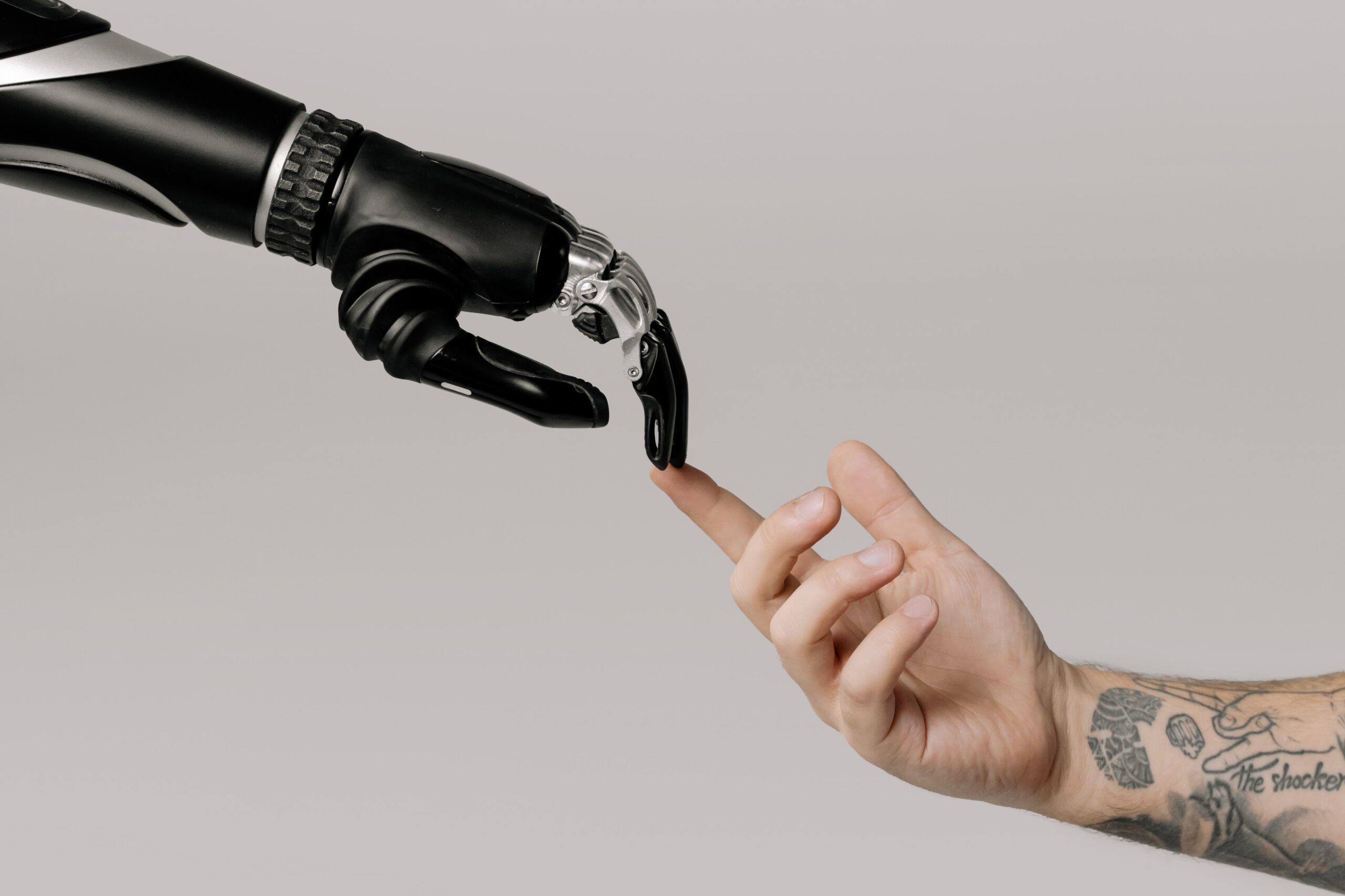
The future of customer experience is not AI versus humans. It is AI plus humans.
Artificial intelligence is changing customer experience faster than almost any other technology. What began with simple chatbots and automation has evolved into intelligent systems that can personalise journeys, support agents, predict customer needs and improve service efficiency at scale.
For many organisations, the opportunity is clear: faster service, lower operational costs and more personalised experiences. But success with AI in customer experience depends on more than deploying new tools. It requires trust, governance and a strategy focused on real customer value.
Used well, AI can strengthen relationships. Used poorly, it can damage them.
Why AI Matters in Customer Experience
Customer expectations continue to rise. People want quick answers, consistent support and relevant interactions across every channel. They also expect businesses to know their history and avoid making them repeat information.
AI helps organisations meet these expectations by improving both speed and quality. It can automate repetitive enquiries, recommend next best actions, assist agents in real time and deliver more relevant experiences based on context.
This allows customer service teams to scale without sacrificing quality, while freeing human agents to focus on more complex or sensitive conversations.
Where AI Creates Real Value
The strongest AI use cases in customer experience usually combine efficiency with better outcomes.
In customer service, AI can classify and route tickets automatically, reducing wait times and ensuring requests reach the right team quickly. Virtual agents can resolve simple queries 24/7, while human agents focus on high-value interactions.
In sales and marketing, AI can identify intent signals, personalise communications and recommend relevant next steps based on behaviour.
Internally, AI copilots can support employees with summaries, suggested replies, knowledge recommendations and workflow automation.
The result is not just lower cost. It is a smoother, smarter experience for both customers and teams.
The Main Risks of AI in CX
Despite the benefits, AI adoption comes with real risks that businesses need to manage carefully.
Trust and Accuracy
If AI provides incorrect information, generic answers or poor recommendations, customer confidence can drop quickly. Trust is difficult to win back once lost. This is why AI should be monitored continuously and connected to reliable knowledge sources.
Privacy and Data Protection
Customer experience relies heavily on personal data. AI systems must operate within clear governance frameworks and comply with relevant privacy regulations. Customers increasingly expect transparency about how their data is used.
Over-Automation
Automation can improve efficiency, but forcing customers through rigid self-service journeys creates frustration.
Some situations require empathy, judgement or flexibility. AI should enhance service, not block access to human help.
Disconnected Experiences
Many businesses deploy AI tools in isolation. A chatbot here, analytics there, another tool somewhere else.
Without integration, customers still experience fragmented journeys and teams work with incomplete information.
Best Practices for Using AI in Customer Experience
The most successful organisations treat AI as part of a broader CX strategy, not a standalone initiative.
1. Start with Customer Problems, Not Technology
Begin with friction points that genuinely need solving. Long wait times, repetitive enquiries, poor handovers or inconsistent service are stronger starting points than adopting AI for its own sake.
2. Keep Humans in the Loop
AI performs best when combined with human expertise. Customers should be able to escalate smoothly when needed, and employees should be empowered to review and improve AI outputs.
3. Use One Connected Customer View
AI is only as strong as the data behind it. Integrating CRM, service and communication systems helps AI generate better decisions and more relevant experiences.
4. Measure What Matters
Focus on business outcomes such as resolution time, customer satisfaction, retention, conversion and productivity, not just automation rates.
5. Build Responsible AI Governance
Define ownership, quality controls, escalation rules and data policies early. Responsible governance builds trust internally and externally.
How redk helps organisations apply AI in CX
At redk, we help organisations turn AI ambition into practical business outcomes. We work across platforms such as Zendesk to design AI-powered customer experience strategies that improve efficiency, service quality and customer loyalty.
Our focus is not simply deploying tools. It is ensuring AI supports your wider operating model, people and customer goals.
If you are exploring AI in customer experience, we can help you define the right roadmap and identify where it will create the greatest impact.
{ "@context": "https://schema.org", "@type": "FAQPage", "mainEntity": [ { "@type": "Question", "name": "How is artificial intelligence changing customer experience?", "acceptedAnswer": { "@type": "Answer", "text": "Artificial intelligence is improving customer experience by enabling faster support, personalised interactions, predictive insights and more efficient service operations across multiple channels." } }, { "@type": "Question", "name": "Why does AI matter in customer experience?", "acceptedAnswer": { "@type": "Answer", "text": "AI matters because customer expectations continue to rise. People expect quick answers, consistent support and relevant interactions, while businesses need to scale service efficiently without reducing quality." } }, { "@type": "Question", "name": "What are the main benefits of AI in customer service?", "acceptedAnswer": { "@type": "Answer", "text": "The main benefits include reduced response times, automated handling of repetitive enquiries, better ticket routing, improved agent productivity, lower operating costs and more personalised customer support." } }, { "@type": "Question", "name": "How can AI improve sales and marketing experiences?", "acceptedAnswer": { "@type": "Answer", "text": "AI can identify intent signals, personalise communications, recommend next best actions and help organisations engage customers more effectively based on behaviour and context." } }, { "@type": "Question", "name": "What risks should businesses consider when using AI in CX?", "acceptedAnswer": { "@type": "Answer", "text": "Key risks include inaccurate responses, loss of customer trust, privacy and data protection issues, excessive automation that frustrates users and disconnected tools that create fragmented customer journeys." } }, { "@type": "Question", "name": "Why is trust important when using AI in customer experience?", "acceptedAnswer": { "@type": "Answer", "text": "Trust is essential because customers quickly lose confidence if AI gives incorrect, generic or poor-quality responses. Reliable data, governance and continuous monitoring are critical for success." } }, { "@type": "Question", "name": "Should AI replace human customer service agents?", "acceptedAnswer": { "@type": "Answer", "text": "No. AI works best when combined with human expertise. Automation can handle simple or repetitive tasks, while people focus on complex, emotional or high-value interactions that require empathy and judgement." } }, { "@type": "Question", "name": "What are best practices for implementing AI in customer experience?", "acceptedAnswer": { "@type": "Answer", "text": "Best practices include starting with real customer pain points, keeping humans in the loop, connecting customer data sources, measuring business outcomes and establishing responsible AI governance." } }, { "@type": "Question", "name": "Why is connected customer data important for AI?", "acceptedAnswer": { "@type": "Answer", "text": "AI performs better when it can access accurate and connected data from CRM, service and communication systems. This enables better recommendations, faster decisions and more relevant customer experiences." } }, { "@type": "Question", "name": "What is the future of AI in customer experience?", "acceptedAnswer": { "@type": "Answer", "text": "The future of customer experience is AI plus humans. Leading organisations will use AI to remove friction, support employees, enable proactive service and create seamless transitions between automation and human assistance." } }, { "@type": "Question", "name": "How can redk help with AI in customer experience?", "acceptedAnswer": { "@type": "Answer", "text": "redk helps organisations turn AI ambition into practical outcomes by designing AI-powered customer experience strategies, improving efficiency, service quality and customer loyalty across platforms such as Zendesk." } } ]
}
What to read next

Build Scalable Customer Service with Zendesk AI | redk
Unlocking the Business Value of AI: Beyond the Tech Hype