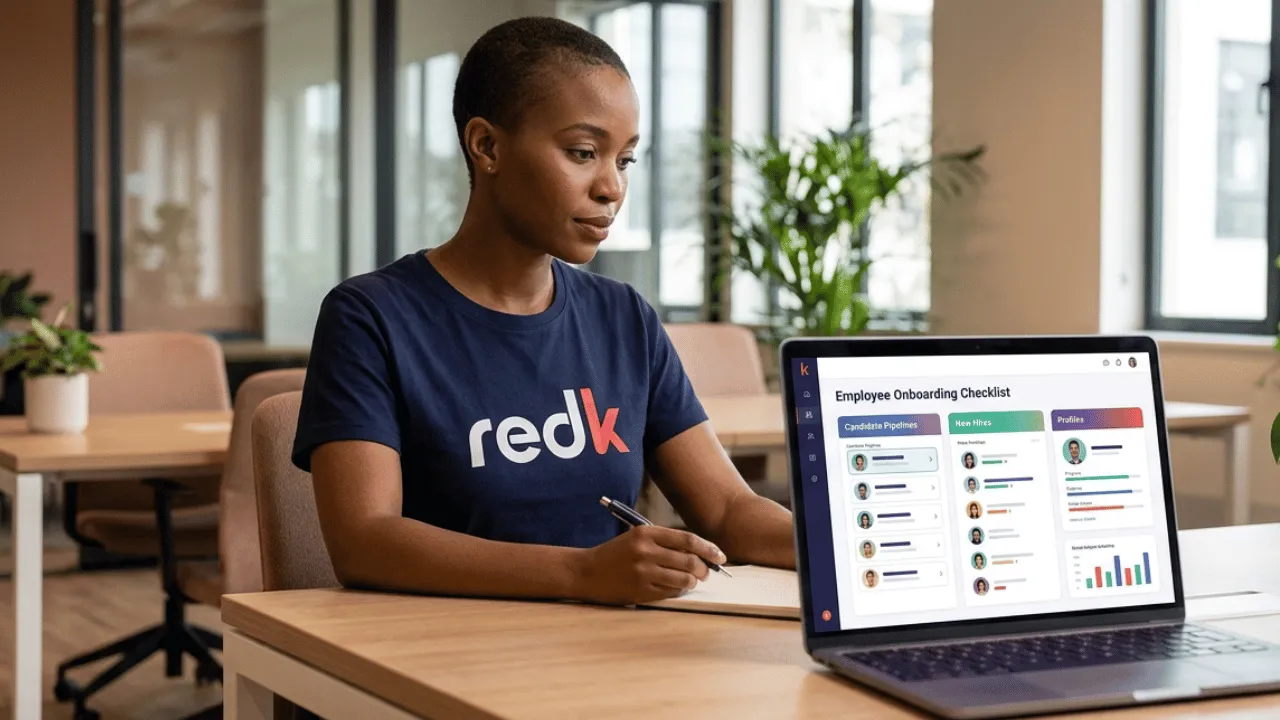
HR management has evolved well beyond administrative tasks. Today, businesses need to manage the entire employee lifecycle efficiently, in an automated way and connected to the rest of the organisation.
From talent acquisition to employee departure, every phase directly impacts productivity, culture and business results.
In this context, monday Work Management makes it possible to transform HR management into a centralised digital platform, facilitating process automation and improving the employee experience.
The employee lifecycle covers all the phases a worker goes through within a company:
Managing this cycle efficiently reduces operational errors, improves the employee experience and increases retention. monday Work Management makes it possible to manage the entire process in a single environment, connecting HR with IT, finance and operations.
The key is not to manage isolated processes, but to build a connected system. To see in detail how this system is structured, visit our monday HR department landing page.
Manage personnel selection with monday Work Management through:
Key automations:
This provides full real-time visibility of the process.
Includes job offer, contract signing and internal validations.
Automation: when the contract is signed → onboarding is automatically activated.
Centralising this phase prevents information loss and improves operational efficiency. The monday process management team can support the design of this flow from day one.
Onboarding is a critical phase. A well-structured process can improve retention by up to 103%.
What to manage:
Real automation:
This enables fully automated onboarding management. For IT teams managing access, it is also key to have an integrated IT service management system connected to the same flow.
Track employee performance with monday Work Management through:
Automations:
This turns the HR function into a continuous improvement engine.
Includes internal surveys, continuous feedback and satisfaction measurement.
Automation:
This allows problems to be anticipated and organisational culture to be improved.
One of the greatest benefits of HR process automation.
What it includes:
Example:
This improves efficiency and reduces administrative burden. If your company also wants to automate processes in other departments, see how we approach workflow automation with monday.
Employee departures must also be structured.
What to manage:
Automation:
This ensures an orderly, error-free process.
It is essential to work with multiple interconnected boards — recruitment, onboarding, employee management, evaluations — to avoid information silos. You can see how we structure these boards in our monday HR solution.
monday Work Management makes it possible to create HR process automations without code through status triggers, automatic assignments and reminders. This facilitates adoption without the need for technical development.
These allow you to measure employee turnover, time to hire and engagement levels. This provides visibility for management and improves decision-making.
To extend capabilities — email, HR software, internal tools — the platform connects with more than 200 tools. If your sales team also uses monday, it can be complemented with monday CRM to connect the employee lifecycle with the commercial cycle.
Complete flow:
Result: fewer errors, fewer emails, greater control.
Full centralisationA single system for the entire employee lifecycle with monday Work Management.
Real automationElimination of manual tasks and more efficient processes thanks to workflow automation with monday.
Better employee experienceClear processes, less friction.
More strategic HRLess operational work, greater business impact. Automation enables a shift towards more strategic, results-oriented HR management.
It does not replace a full HRISIt does not cover payroll or benefits management. Integrations are required to cover these areas.
Need for a solid initial structurePoor design can create disorder. It is essential to define processes before implementing. At redk, we accompany this process from diagnosis through to go-live.
For a correct implementation:
If you want an expert to guide this process, visit our monday HR department solution or get in touch with our team directly.
Employee lifecycle management can no longer depend on spreadsheets, emails and manual processes. monday Work Management allows HR to be transformed into a centralised, automated and connected system where every phase of the employee lifecycle is integrated within a continuous flow.
The key is not to manage people, but to manage processes that enhance their performance and experience. And if you also connect HR with sales through monday CRM or with the commercial team through the monday sales team landing page, the impact multiplies across the entire organisation.